احصل على عرض سعر مجاني
-
هاتف / واتساب +86-13925899945
-
بريد إلكتروني: info@showcasecabinet.com







كشك مركز التسوق: الدليل الكامل للتصميم والشراء
كيفية تصميم وشراء كشك تسوق في مركز تجاري: قواعد المول، والتخطيطات حسب المنتج، والمواد، والإضاءة، وعوامل التكلفة، ومُدد التسليم — مباشرة من المصنع.
النقاط الرئيسية
- كشك مركز التسوق هو وحدة بيع بالتجزئة قائمة بذاتها، معظمها بمساحة 4–15 م² (40–160 قدم مربع), ، مبنية وفق قواعد المركز التجاري الخاصة بالمساحة والارتفاع والطاقة.
- صمّم وفق قواعد المركز التجاري أولاً. معظم المراكز تضع حداً أقصى لارتفاع الكشك وتشترط مسافة خلوص للممر؛ بعضها يطلب ألواحاً مقاومة للحريق ودائرة كهربائية مخصصة.
- طابق التصميم مع المنتج: المجوهرات ومستحضرات التجميل تحتاج زجاجاً مضاءً وقابلاً للقفل؛ الأغذية والمشروبات تحتاج فولاذاً مقاومًا للصدأ يتحمل الحرارة والدهون.
- أي شيء يشغّله العميل يجب أن يقع ضمن نطاق وصول ADA البالغ 15–48 بوصة, ، ويبقى سطح الدفع عند 38 بوصة (965 مم) أو أقل.
- السعر يتبع ستة محركات — الحجم والمواد والزجاج والإضاءة واللافتات والطاقة — وليس تخميناً لكل متر مربع.
- الأكشاك المخصصة تُنتج عينة في 7–10 أيام والإنتاج في 30–45 يوماً، وتُشحن مفككة من المصنع.
جدول المحتويات
- ما هو كشك مركز التسوق؟
- ما أنواع الأكشاك التي تصلح لمركز التسوق؟
- كيف تصمم كشكاً يناسب مركزك التجاري؟
- ما المواد التي تصمد أمام حركة المركز التجاري؟
- كيف ينبغي إضاءة الكشك ووضع علامته التجارية؟
- ما الذي يحدد تكلفة الكشك؟
- هل تستأجر كشكاً أم تشتريه؟
- كيف يُبنى الكشك المخصص؟
- ثلاثة أكشاك قمنا ببنائها
- الأسئلة المتكررة
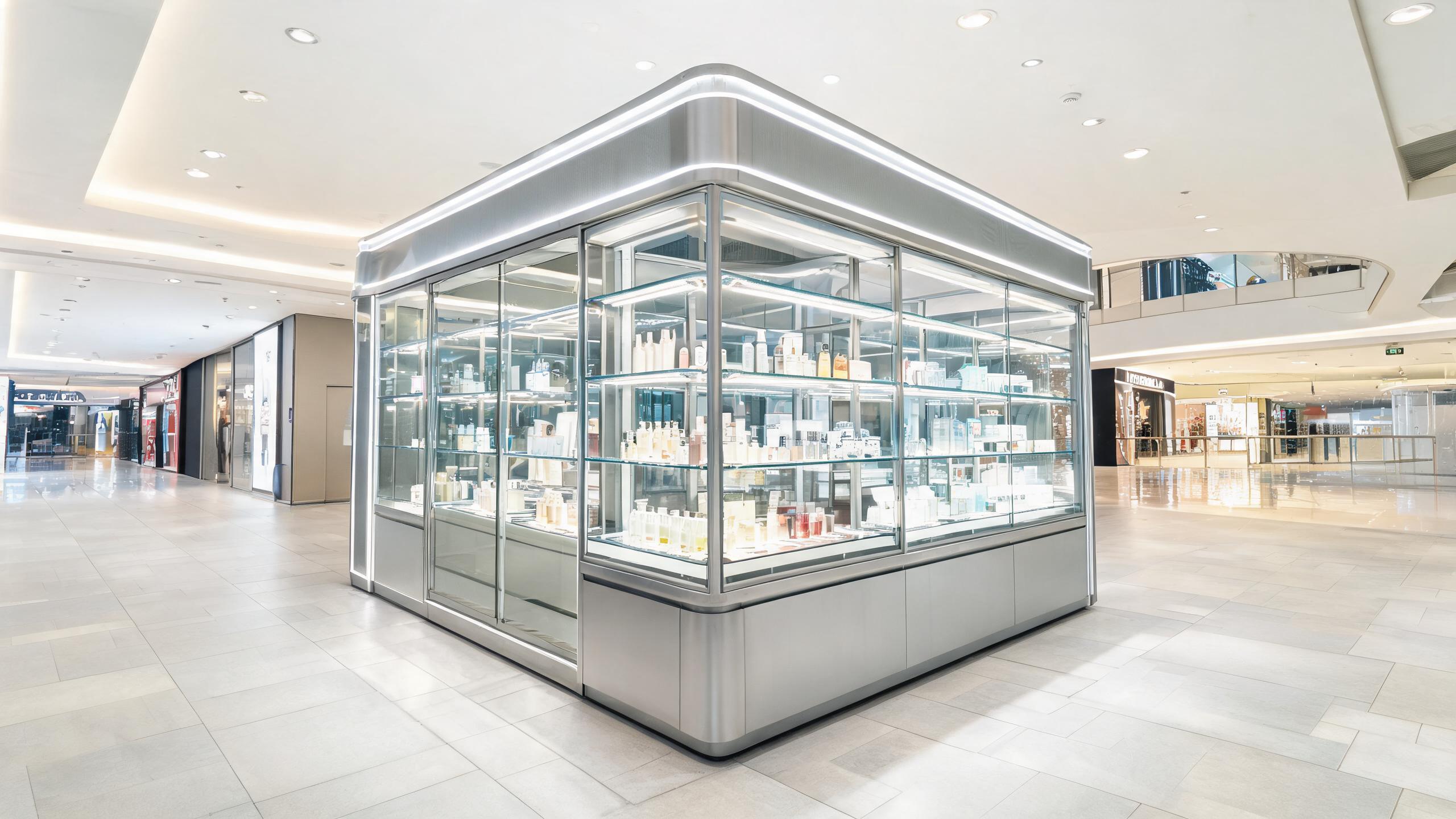
كشك مركز التسوق هو أرخص طريقة لوضع علامة تجارية أمام حركة المشاة في المركز التجاري دون توقيع عقد إيجار متجر كامل. وهو أيضاً غير متسامح: الوحدة يجب أن تبيع وتخزّن وتضيء وتغذّي نفسها بالطاقة داخل مساحة أصغر من غرفة معيشة معظم الناس، ويجب أن تفعل ذلك وفق قواعد يضعها المركز التجاري قبل أن ترسم خطاً واحداً.
يغطي هذا الدليل القرار بأكمله — ما هو الكشك، وكيف تصمم واحداً يجتاز مراجعة المركز التجاري، وما المواد التي تصمد، وما الذي يحرّك السعر فعلاً، وكيف يُبنى الكشك المخصص. كُتب من منظور المصنع، حتى ترى ما هو قيد حقيقي وما هو مجرد هامش ربح.
ما هو كشك مركز التسوق؟
كشك مركز التسوق هو وحدة بيع بالتجزئة أو خدمة قائمة بذاتها توضع في المنطقة المشتركة للمركز التجاري — ممر أو ساحة أو بهو. ليس متجراً بجدران؛ بل هو منصة عرض ومجموعة واجهات عرض ولافتة، مجمّعة في جزيرة واحدة. المركز التجاري يملك الأرضية، ومشغّل الكشك يستأجر المساحة، والوحدة نفسها أصل يملكه المستأجر.
ثلاثة أمور تفصل الكشك عن أي تجهيز متجر عادي:
- إنه قائم بذاته. الطاقة والإضاءة والتخزين واللافتات كلها مدمجة في الوحدة، لأنه لا توجد غرفة خلفية لتمرير كابل إليها.
- إنه محدود الحجم. معظم المراكز التجارية تحدّ من المساحة والارتفاع معاً، حتى لا يحجب الكشك خطوط الرؤية على طول الممر.
- إنه قابل للنقل. الكشك مصمم ليُفكّ ويُعاد تركيبه في موقع جديد عند انتهاء الإيجار أو إعادة تنظيم المركز التجاري لمخططه.
هذا المزيج هو سبب استمرار نمو هذا الشكل. أكشاك البيع بالتجزئة ككل هي أكبر قطاع استخدام نهائي في سوق الأكشاك العالمي، وأكشاك المراكز التجارية هي ثاني أكبر نوع ضمنها — الشكل يناسب العلامات المتخصصة التي تريد حركة المركز التجاري دون دفع إيجار متجر كامل.
إذا كنت تقارن كشكاً بتجهيز كامل، فإن دليلنا لأنواع خزائن العرض يغطي المنصات والخزائن الجدارية وصيغ الجزر التي عادةً ما تكون داخل أحدها.
ما أنواع الأكشاك التي تصلح لمركز التسوق؟
المنتج يحدد الكشك، وليس العكس. خمس صيغ تغطي معظم مواقع المراكز التجارية:
أكشاك البيع بالتجزئة والتخصصية
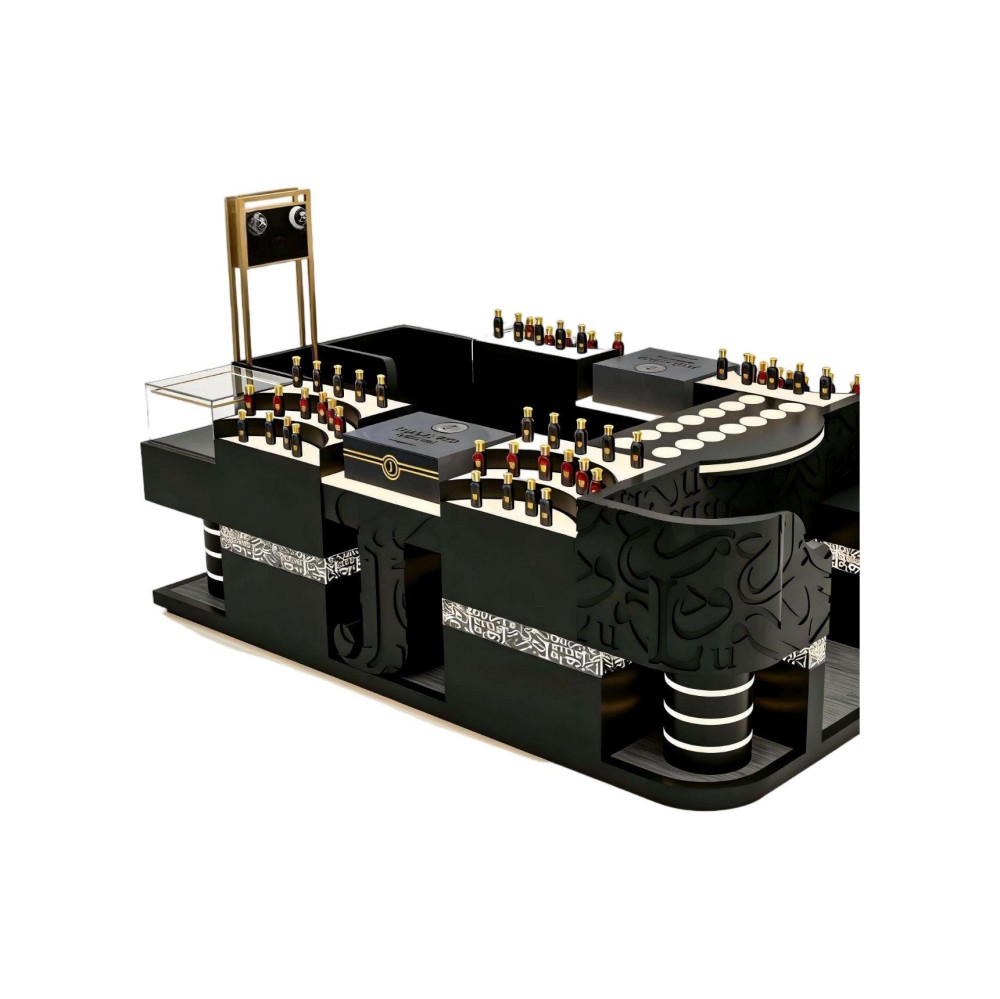
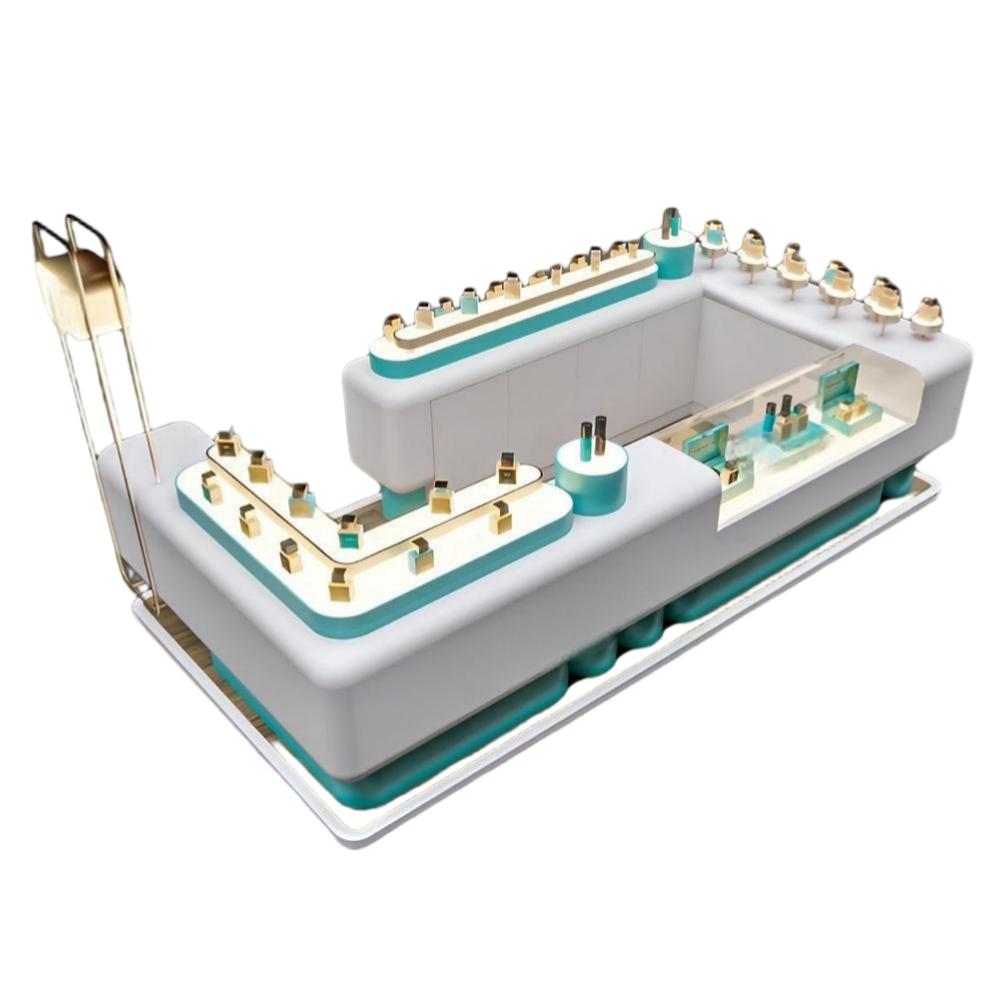
المجوهرات والساعات والإكسسوارات ومستحضرات التجميل وإكسسوارات الهواتف. تعمل هذه بالزجاج: خزائن قابلة للقفل بارتفاع المنصة، مضاءة من الأعلى، بمساحة صغيرة تُبقي المخزون مرئياً وآمناً. كشك العطور وكشك مستحضرات التجميل هما النسختان الأكثر إنتاجاً لدينا — كلاهما وحدات جزيرة بعرض متدرج ومخزون خلفي مدمج.
أكشاك الأغذية والمشروبات
القهوة والمخبوزات والوجبات الخفيفة والمشروبات. هذه من الفولاذ المقاوم للصدأ والزجاج المقسّى، لأنها يجب أن تتحمل الحرارة والدهون والغسيل اليومي. الطاقة والماء يمران داخل الإطار حتى تستقر المنصة ملاصقة لنقطة المرافق في المركز التجاري بدلاً من ترك فجوة تتجمع فيها الفتات.
أكشاك الخدمات
إصلاح الهواتف ونسخ المفاتيح ونقاط التذاكر وبطاقات الهدايا. الوحدة في معظمها منصة وتخزين، بواجهة معاملة واضحة ولافتة فوق مستوى الرأس.
الأكشاك المؤقتة والموسمية
وحدات بإيجار قصير تُركّب وتُفكّ في موسم واحد. البناء المعياري والشحن المفكك يهمان هنا أكثر من التشطيب، لأن الوحدة قد تنتقل ثلاث مرات في السنة.
Mobile and cart formats
A wheeled or towed unit for markets and events. It trades floor area for mobility — the same display logic in a footprint you can move without a crane.
كيف تصمم كشكاً يناسب مركزك التجاري؟
Start with the mall’s rules, not with the design. Every center publishes a kiosk guideline, and it usually covers five things: maximum footprint, maximum height, minimum clearance to the aisle, electrical supply, and fire or finish requirements. Get those in writing before you sketch.
Mall rules you have to design around
- Footprint and height. Most centers cap both. A kiosk that exceeds the height limit blocks sightlines and gets rejected at review, however good it looks.
- Aisle clearance. The mall will set a minimum walking width around the unit. Design the display to face inward rather than bulge outward.
- Power. Confirm the supply you are given — single or three-phase, and the circuit rating — before you specify lighting and any equipment.
- Fire and finish. Some centers ask for fire-rated panels or specific finishes in public areas. Ask early; it is cheaper to specify once than to rebuild.
Layout by product type
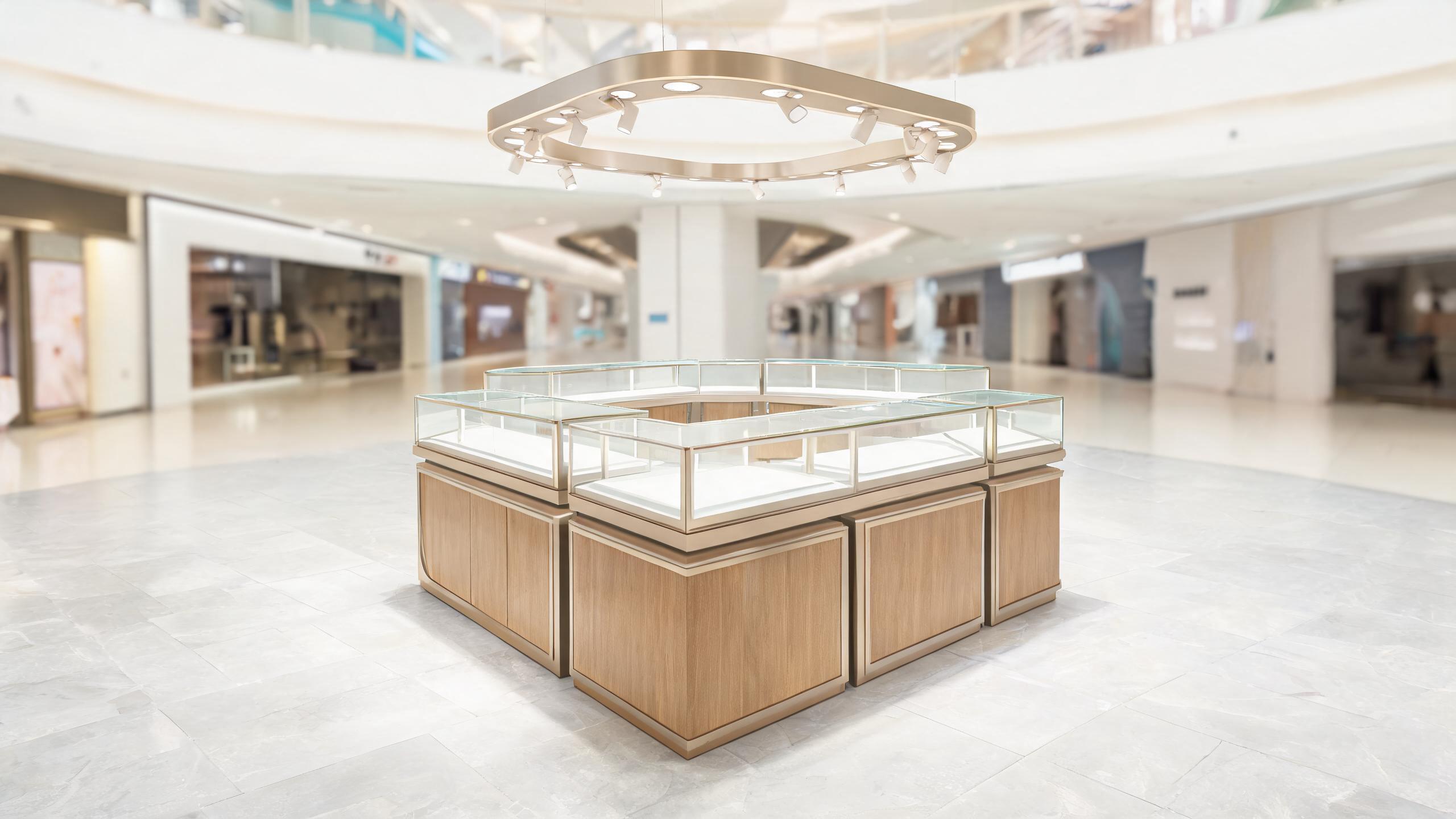
Jewelry and cosmetics want lit, lockable glass at counter height, with the transaction point on one corner and backstock directly under the display. Food wants a clear work triangle — prep, service and payment — with the customer queue kept outside the staff zone. Phone and service kiosks want one deep counter for the transaction and a small lit display for accessories.
Whatever the product, keep the customer-facing surface at one height. Mixed heights read as clutter from the corridor, and clutter does not stop a shopper walking past.
There is one rule the mall will not bend on: accessibility. In the US, a check-out counter surface runs at a maximum of 38 بوصة (965 مم), and any control a customer operates — a card reader, a screen, a lift-up glass — has to sit inside the reach range of 15 to 48 in. The US Access Board’s ADA standards set both, and building to them from the start costs nothing extra. Adding them later means rebuilding the counter face.
Storage and backstock under the counter
A kiosk has no back room, so every unit of stock lives under the counter or inside the display base. Plan for a full day’s restock, not a week’s: drawers for high-turn items, a lockable cabinet for the till and valuables, and a small gap for a bag and a card terminal. Anything that does not fit under the counter is stock you cannot sell that day.
ما المواد التي تصمد أمام حركة المركز التجاري؟
A kiosk is touched, leaned on and cleaned hundreds of times a day. Three material groups do the work:
- MDF with veneer or lacquer for carcasses and finished panels. It is stable, takes any colour and holds hardware securely — the standard for the display body.
- Stainless steel and metal for frames, bases and food-service surfaces. Brushed gold, champagne and black are the common retail finishes; stainless resists grease and cleans easily.
- Tempered safety glass for every display face. It is far stronger than ordinary glass and breaks into small dull pieces rather than sharp shards. For retail fixtures it is the default, not an upgrade.
One material trap: a high-gloss finish photographs beautifully and shows every fingerprint on a mall floor. If the kiosk faces a corridor with heavy traffic, a satin or textured finish on the touch surfaces saves your staff a day of polishing.
كيف ينبغي إضاءة الكشك ووضع علامته التجارية؟
A kiosk competes with everything around it, so the light has to do two jobs: make the product look good and make the unit visible from thirty metres down a corridor.
Light the product, not the room
Use warm white around 3000K with a CRI of 90 or higher. Warm light flatters gold and coloured stones; a high CRI keeps the colour honest. The جمعية الهندسة الإضاءية publishes the standards behind colour quality, and for retail the target is simple — the product should look better than it does in daylight, not different.
Build the sign into the kiosk
An illuminated sign panel or lightbox on the kiosk head is what makes the unit readable from across the mall. Design it as part of the structure, not an afterthought bolted on top — it carries the brand, and in most centers it is the one element allowed above the height line.
Keep the wiring inside
Every LED strip, sign and socket runs to one internal distribution point, so the unit connects to the mall supply in one place. Exposed cable is the fastest way to fail an inspection.
ما الذي يحدد تكلفة الكشك؟
There is no honest per-square-metre price for a kiosk, because two units of the same size can differ threefold. Six things move the number:
- Size and complexity. A simple counter island and a multi-sided display island are different builds.
- Materials. Lacquer and veneer sit at one end, solid timber and metal at the other.
- Glass. Tempered glass throughout costs more than glass only on the display faces.
- الإضاءة. Integrated LED, backlighting and a lit sign all add cost — and all add sell-through.
- Signage and branding. A fabricated lightbox is a build item, not a sticker.
- Power and services. Food kiosks that need water and heavier electrics cost more than a display-only unit.
We break the numbers down properly in our guide to what a display case really costs, and the same logic applies here: the price tracks the specification, not the brand on the invoice.
هل تستأجر كشكاً أم تشتريه؟
Lease the space; buy the kiosk. That is the usual answer, and it holds for most operators.
Renting the pitch keeps you flexible — mall leases for kiosks often run month to month or by season, so you can move or exit without carrying an asset. The kiosk itself is the opposite: a well-built unit lasts years, moves with you, and pays for itself the first time you avoid buying a second one. A modular unit that flat-packs is also far cheaper to ship and store between sites.
The exception is a short test of a new market or product, where renting the whole fit-out spreads the risk across a few months. If you expect to trade for more than a season, buying the unit wins on cost.
كيف يُبنى الكشك المخصص؟
From a factory, a custom kiosk follows the same route as any display program:
- Brief and consultation. You send the mall’s rules, the floor plan and the product mix. We turn them into a clear specification.
- Design. Our team produces 3D visuals and dimensioned drawings for sign-off — including the height and footprint check against the mall guideline.
- Sample. Before mass production we build a physical sample so you can verify materials, lighting and finish. Sample runs 7–10 days.
- Production. The unit is built in our own workshop with multi-stage QC. Production runs 30–45 days.
- Delivery. Flat-pack modules in foam and plywood crates, shipped from Guangzhou with full export documentation.
- Install. A numbered assembly sheet and remote support; most kiosks assemble in about a day with no special tools.
ثلاثة أكشاك قمنا ببنائها
Real units, real constraints:
- Jewelry kiosk in a mall (China) — a corner kiosk for a light-jewelry brand, built as a compact island with a lit display head and lockable glass, sized to the mall’s clearance rule.
- Makeup kiosk (Malaysia) — a cosmetics island with tiered lit display and backstock under the counter, built to fit a fixed mall pitch.
- Bakery kiosk (China) — a food unit in stainless steel and tempered glass, with the display and service faces split so the queue stays out of the work zone.
You can see the full range of island and counter formats in our mall kiosks collection, including the mall kiosk for sale, the U-shape jewelry showcase and the retail mall kiosk.
الأسئلة المتكررة
How much does a shopping center kiosk cost?
It depends on size, materials, glass, lighting, signage and power. A simple display island and a fully lit food unit are different builds, so the only honest answer comes from a specification. Send the mall’s rules and the product mix and we quote against them.
How big can a kiosk be in a mall?
Every center sets its own limits on footprint and height, plus a minimum clearance to the aisle. Check the mall’s kiosk guideline first — it is the one document that decides whether your design passes review.
How long does it take to get a custom kiosk?
Sample in 7–10 days, production in 30–45 days, then shipping. Flat-pack shipping is cheaper and easier to handle on site than a fully assembled unit.
Can a kiosk be moved to a new location?
Yes, if it is designed modular. That is why we build kiosks as flat-pack modules rather than one welded block — the unit can be dismantled, shipped and rebuilt at a new pitch.
Do you build to the mall’s electrical and fire rules?
Yes. Tell us the mall’s requirements up front — supply type, circuit rating, finish and fire constraints — and we design and build to them.
Do you provide lighting and signage inside the kiosk?
Yes. Internal wiring, sockets, LED display lighting and a lit sign panel are all part of the build, run to one internal distribution point for a single connection.
Planning a kiosk for a specific mall? Send us the mall’s kiosk rules and your product mix — we will check the height and footprint, draw the layout, and send a quote with a drawing within 24 hours.