Get Free Quote
-
Tel/Whatsapp +86-13925899945
-
Email: info@showcasecabinet.com








Custom Jewelry Display Cases: The Complete Factory Guide
A complete factory guide to custom jewelry display cases — materials, lighting, cost, timeline, and how to choose the right manufacturer for your store.
Table of Contents
- Key Takeaways
- Introduction
- What Are Custom Jewelry Display Cases?
- Materials: What You’re Actually Choosing Between
- Lighting: Why It Makes or Breaks the Sale
- Display Styles and Configurations
- How Much Does a Custom Display Case Cost?
- The Custom Process, Step by Step
- How to Choose a Manufacturer
- Glass and Security
- Customization Options
- Frequently Asked Questions
- Ready to Get Started?
Key Takeaways
- A custom jewelry display case runs from a few hundred dollars for a standard counter to five figures for a full-store program. Price follows size, materials, lighting, and glass spec — not branding.
- Factory direct cuts cost by 30–50% compared to retail fixture middlemen. You also get full control over dimensions, materials, lighting, and layout.
- Lighting matters more than most buyers realize. 3000K warm white with CRI ≥ 90 makes diamonds and colored stones look their best, which directly affects sell-through.
- MDF with veneer or lacquer is the industry standard for jewelry cases — stable, affordable, and takes any finish. Solid wood costs 50–100% more and is reserved for accent pieces.
- Standard production is 30–45 days. Shipping flat-packed (KD) instead of assembled cuts freight by half or more.
- The fastest way to start: send your store layout or sketch for a free design and quote.
—
Introduction
Walk into a jewelry store that’s doing well, and you’ll notice something beyond the merchandise: the cases are doing real work. They shape how customers perceive value, how long they stay, and what they end up buying.
If you’re reading this, you already know you need display cases. The question is what kind, what material, what lighting, how much to spend — and whether custom is worth it over off-the-shelf.
This guide covers every decision point, from sizing and materials to lighting and locks. It’s built around factory production reality rather than retail markup logic, so you can see what actually moves the price and what doesn’t.
—
What Are Custom Jewelry Display Cases?
Custom cases are built to your store’s exact dimensions, layout, and brand look — not picked from a catalog of standard sizes. For jewelry stores, this matters because your floor plan, wall lengths, and merchandising strategy are unique. A one-size-fits-all case will either waste space or look out of place.
Most jewelry stores mix four basic types:
- **Counter displays** — the low glass-top cases where customers stand to try on pieces. Usually 90–110cm tall, with a slanted or flat glass top and storage below.
- **Tall floor cases** — full-height vitrines against walls or as freestanding features. Used for statement pieces, necklace displays, or brand statements.
- **Pedestal displays** — single-item towers or columns for high-value pieces, feature windows, or museum-style presentation.
- **Wall systems** — perimeter displays combining glass cases, open shelving, and integrated lighting, built to exact wall lengths.
Learn more about the different types of display cases →
—
Materials: What You’re Actually Choosing Between
Material is the biggest lever you have for both cost and appearance. Here’s what each option really means.
MDF with Veneer or Lacquer
MDF is the workhorse of custom display case manufacturing. It’s stable, affordable, and takes finishes beautifully — from wood veneers that look like solid wood to high-gloss lacquer in any color.
For jewelry stores, MDF with veneer or lacquer is the standard. It won’t warp with temperature changes, it holds hardware securely, and you can get it in literally any color.
MDF vs Plywood: which one should you choose for your retail fixtures? →
Solid Wood
Solid wood (oak, walnut, ash) adds warmth and perceived value — at roughly 50–100% more cost than MDF with veneer. You’ll see it most often on accent pieces or in high-end boutique concepts where the material itself is part of the brand story.
Stainless Steel and Metal
Metal frames and bases give a contemporary, high-end feel. Brushed gold, champagne gold, rose gold, gunmetal, and black are all popular for jewelry stores. Stainless steel is durable, easy to clean, and — especially in a brushed finish — shows fewer fingerprints than you’d expect.
Glass
Tempered safety glass is non-negotiable for retail jewelry display. It’s 4–5 times stronger than regular glass and breaks into small, relatively safe pieces rather than sharp shards. The U.S. federal safety-glazing standard 16 CFR 1201 sets the requirements for architectural glass used in commercial fixtures. Any reputable factory will use glass that meets it.
—
Lighting: Why It Makes or Breaks the Sale
Put the same diamond in a case with bad lighting and a case with good lighting, and you’re looking at what might as well be two different stones. Good lighting makes color pop and stones sparkle. Customers reach for their wallets. For a factory example of how backlighting works in practice, see our JW-23 backlit counter project — a black marble and champagne jewelry counter that uses both top and back lighting.
Color Temperature
For most jewelry, 3000K warm white is the sweet spot. It enhances gold, flatters warm-toned gemstones, and creates a cozy, premium feel. 4000K neutral white works for silver, white gold, or very contemporary concepts, but it can make warm metals look flat.
CRI (Color Rendering Index)
CRI measures how accurately a light source renders colors compared to natural light. For jewelry, aim for CRI ≥ 90. Below 80, rubies look dull, emeralds look flat, and nothing looks quite as good as it should.
The Illuminating Engineering Society (IES) publishes the TM-30 standard, which goes beyond simple CRI to measure both fidelity (how close colors are to their reference) and gamut (how vivid they appear). For jewelry, you want good fidelity plus a slight gamut boost — stones look like themselves, just a touch more alive.
Three Lighting Types, Used Together
- **Top spotlights** — focused beams that highlight individual pieces and create sparkle. Essential for diamond and faceted stone displays.
- **LED strip lighting** — even ambient light around shelves or at the base of cases. Fills shadows and creates depth.
- **Backlighting** — from behind or below, used for translucent displays or brand signage. Dramatic, but not right for every piece.
Jewelry display case lighting: a complete guide to color temperature and CRI →
—
Display Styles and Configurations
Jewelry stores aren’t one-size-fits-all, and neither are their display cases. Here are the configurations most stores combine. Curved glass cabinets add a premium, boutique feel and work especially well in corner locations — see our brushed gold curved display cabinet project (JW-24) for a real example from a 2026 Chinese gold store.
Counters and Vitrines
The main selling floor — low glass-top counters where customers try on rings, bracelets, and small pieces. Most stores use a mix of straight counters for the main floor and curved or angled pieces for corners and feature areas.
Pedestals and Towers
For high-value or statement pieces, a pedestal or tower display puts the piece on a stage — literally. Single-item pedestals with spotlights are common for engagement rings, high-end watches, and featured collections.
Wall Cases and Perimeter Systems
Full-height wall cases frame the store and hold most of the inventory. They can be all-glass, partially open, or a mix, and they often integrate with the store’s millwork and lighting design.
Necklace Busts and Towers
Necklace displays are their own category. Bust forms, tower stands, slanted display boards, and wall-mounted hooks each work better for different necklace lengths and store layouts.
12 necklace display showcase ideas for jewelry retailers →
Ideas and Inspiration
Not sure what look you’re going for? Our roundup of 15 jewelry display ideas covers everything from minimalist modern to luxury boutique concepts.
15 jewelry display ideas for retail stores →
—
How Much Does a Custom Display Case Cost?
Price is usually the first question. The honest answer is: it depends. But here’s a realistic range for factory-direct custom cases.
| Type | Price Range | Notes |
|---|---|---|
| Standard counter | $300–$800 | Single straight unit, MDF with veneer, basic LED |
| Custom counter | $800–$2,500 | Custom size, premium materials, upgraded lighting |
| Tall vitrine / wall case | $1,500–$6,000 | Full-height, custom length, premium hardware |
| Pedestal display | $500–$2,000 | Single tower, glass dome, spotlight |
| Full-store program | $10,000–$50,000+ | Complete store design, multiple case types, wall systems |
What moves the price the most? Size, material, lighting, and glass specification — not “premium” branding or middleman markup when you buy factory direct.
Other costs to factor in:
- **Sampling**: $100–$300 for a prototype, usually credited against a production order.
- **Shipping**: Freight varies by distance and whether you ship KD (flat-packed) or fully assembled. KD shipping cuts freight by roughly half and reduces damage risk.
- **Installation**: Simple cases are plug-and-play. Full-store installs might need a local handyman or the factory’s installation team.
How much does a custom jewelry display case cost? The full breakdown →
—
The Custom Process, Step by Step
1. Design and Quote (Week 1)
Send your store layout, sketch, or reference photos. The factory creates a 3D design and detailed quote — usually free for serious inquiries.
2. Prototype / Sample (Weeks 1–2, optional)
If you want to see materials and finishes in person before committing to a full order, a sample case is worth the cost. Most factories credit the sample fee against the production order.
3. Production (Weeks 2–6)
Inside the Factory: How a Display Case Gets Built
Before we walk through the timeline, here’s what the production floor actually looks like. Each case goes through six stages, and the photos below show a few of them.
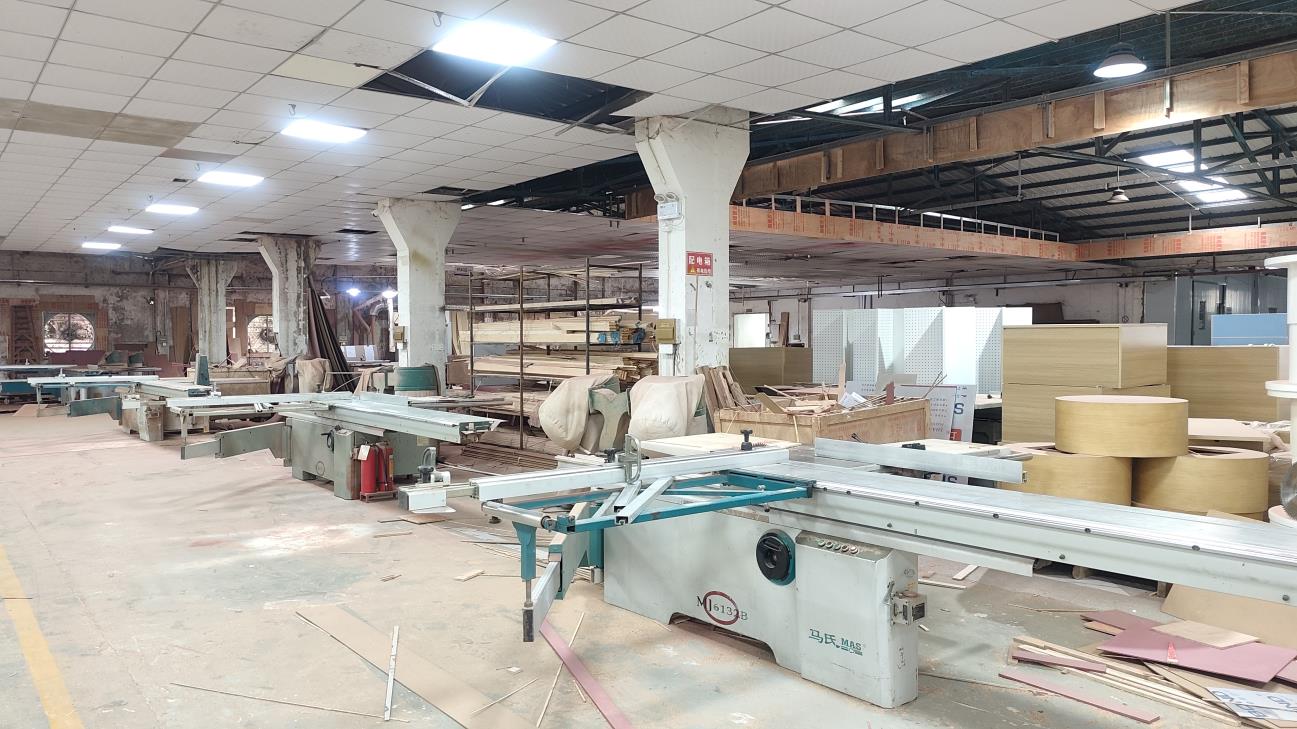
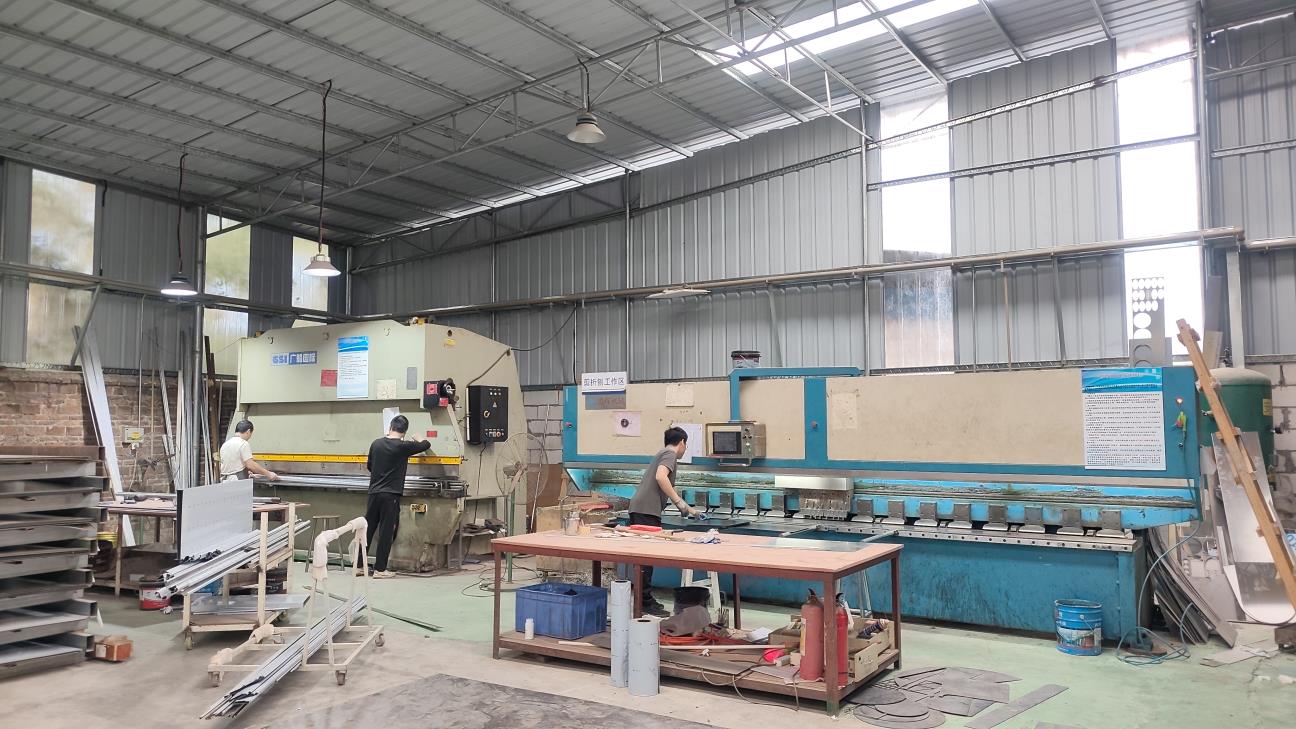
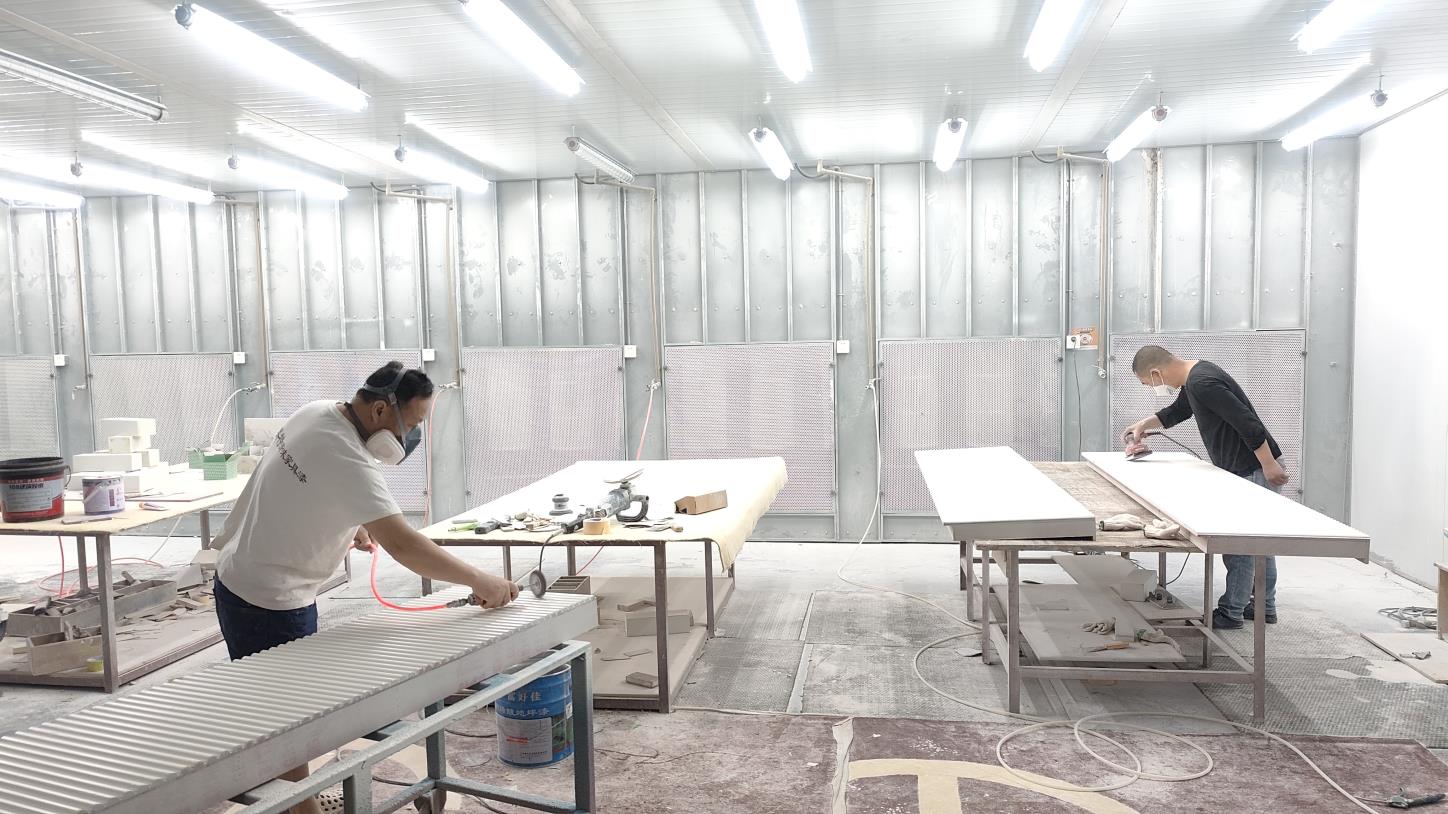
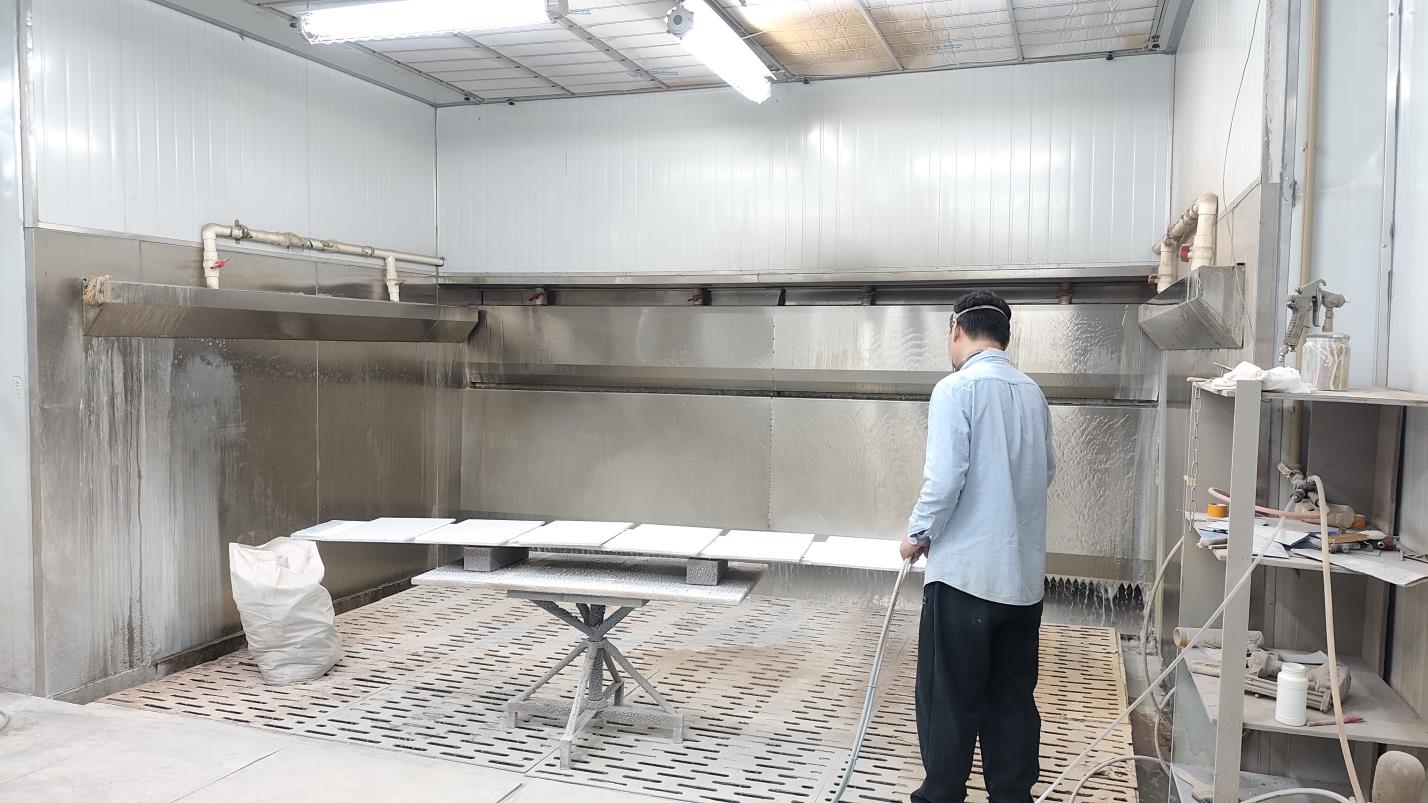
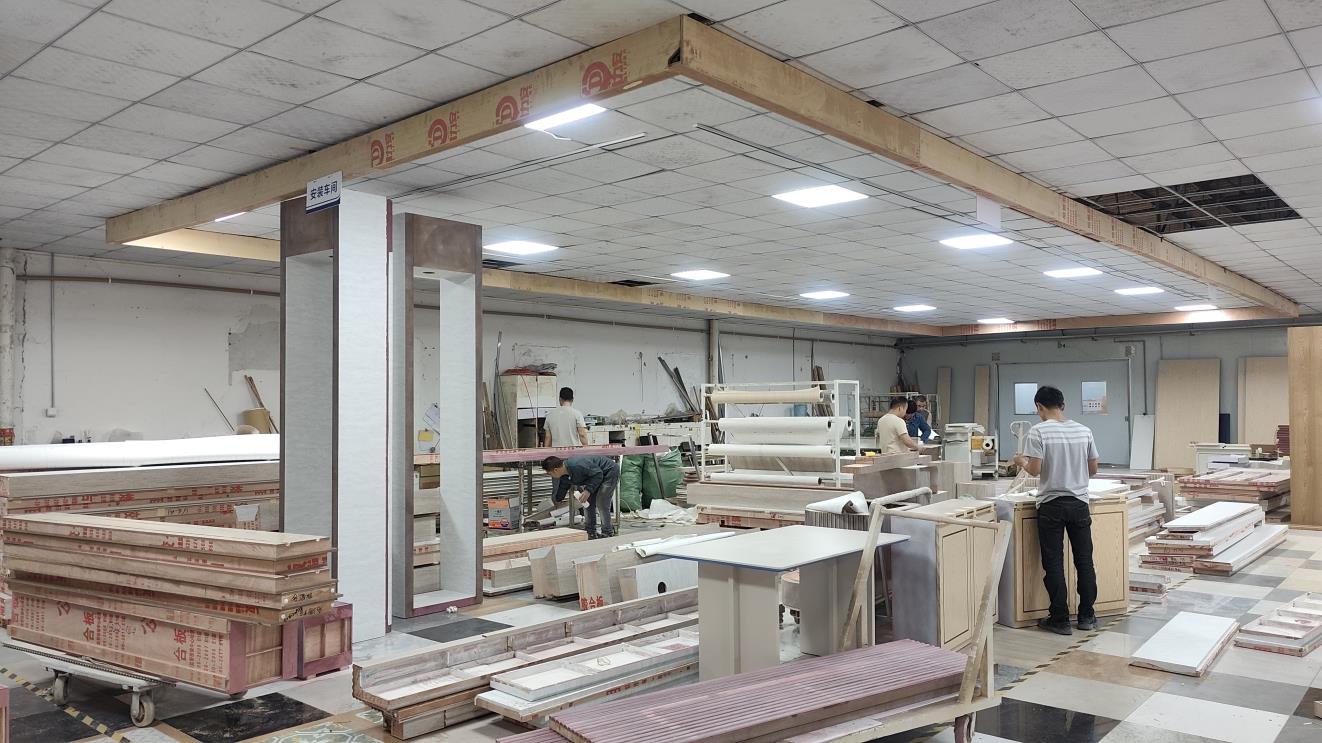
Standard production runs 30–45 days. Rush is possible for a premium. The timeline roughly breaks down as:
- **Week 1**: Material cutting and preparation
- **Weeks 2–3**: Metalwork and woodwork — frame construction, panel fabrication
- **Week 4**: Surface treatment — painting, veneering, polishing
- **Week 5**: Assembly — glass fitting, lighting installation, quality check
- **Week 6**: Final QC, packaging, and shipping preparation
4. Shipping (1–4 weeks)
Ocean freight takes 3–4 weeks for most destinations. Air freight is faster — 5–7 days — but significantly more expensive. KD (knock-down) shipping, where cases are flat-packed and assembled on site, cuts freight cost roughly in half and reduces damage in transit.
5. Installation and Setup
Simple counter cases and pedestals arrive ready to use — just place them and plug them in. Full-store wall systems and perimeter cases usually need on-site assembly and wiring, which the factory can coordinate or a local contractor can handle.
—
How to Choose a Manufacturer
Not all display case manufacturers are the same. Here’s what to check.
Experience with Jewelry Retail
Jewelry displays have specific requirements. Security, lighting quality, glass clarity, lock mechanisms, and anti-tarnish interior materials all matter. A manufacturer that mainly does restaurant furniture or clothing store fixtures won’t necessarily get these details right.
Factory Direct vs. Trading Company
Factory direct means you’re working with the people who actually build the cases. No middleman markup, direct communication with the production team, easier customization. The tradeoff: you handle shipping and import logistics yourself or through a freight forwarder.
What to Ask
- Can I see photos of past jewelry store projects?
- What materials do you typically use for jewelry cases?
- What’s the standard production time, and is rush available?
- Do you offer 3D design renders?
- What warranty do you provide?
- Can you ship KD or fully assembled?
—
Glass and Security
For jewelry stores, glass and security go together.
Tempered Glass
All retail display cases should use tempered safety glass. It’s stronger than annealed glass, and if it breaks, it shatters into small, relatively safe cubes rather than sharp shards — a requirement under the U.S. Consumer Product Safety Commission’s 16 CFR 1201 standard for architectural glazing.
Locks and Security
Most jewelry display cases have locks, but not all locks are equal. For high-value merchandise, look for:
- Keyed locks on every case and drawer
- Reinforced lock plates
- Sliding glass doors with security stops
- Concealed hinges where possible
For very high-value items, consider alarm-integrated cases and security pedestals.
The Layered Security Approach
The best security is layered: good locks, tempered glass, alarm systems, and store layout that puts high-value pieces where staff can always see them. The Jewelers’ Security Alliance — the trade’s crime-prevention body since 1883 — builds its guidance around this layered-security approach.
—
Customization Options
One of the biggest advantages of going custom is that you’re not locked into a catalog. Here’s what you can typically adjust:
- **Size and shape**: Exact dimensions to fit your floor plan, including curved corners, angled ends, and irregular wall lengths
- **Materials**: MDF, solid wood, stainless steel, stone tops — whatever fits your brand
- **Finish**: Any paint color, wood veneer, metal finish (brushed gold, rose gold, gunmetal, black, chrome)
- **Lighting**: LED color temperature, CRI, spotlight count and placement, strip lighting, backlighting
- **Glass**: Tempered or low-iron (extra-clear), single or double doors, sliding or hinged
- **Interior**: Velvet, microfiber, or laminate deck colors; custom-sized trays and inserts
- **Storage**: Drawers, cabinets, pull-out trays, locked storage
- **Electrical**: Integrated wiring, switch placement, dimming options
—
Frequently Asked Questions
How long does a custom jewelry display case take to make?
Standard production is 30–45 days from design approval to shipping. Add 3–4 weeks for ocean freight or 5–7 days for air freight. Rush production is available for a premium, typically compressing the timeline to 15–20 days.
Can I get a sample before ordering a full store?
Yes. Most factories offer prototype or sample cases for $100–$300, and the fee is usually credited against a production order. A sample lets you check materials, finishes, lighting quality, and construction before committing to a larger order.
What’s the difference between MDF and solid wood for display cases?
MDF is stable, affordable, and takes any finish. Solid wood costs more, is heavier, and adds perceived value. For most jewelry stores, MDF with a high-quality veneer or lacquer finish hits the best balance — it looks premium, costs less, and won’t warp or crack with humidity changes.
Read our full MDF vs plywood comparison →
Do custom display cases come assembled?
Most factories ship KD (knock-down / flat-packed) by default to save freight and reduce damage. Assembly is usually straightforward — a local handyman or your store team can put most cases together. Fully assembled shipping is available but costs significantly more and carries higher damage risk.
What kind of lighting is best for diamond displays?
For diamonds, you want high-CRI (≥90) warm white (3000K) spotlights positioned to create sparkle. The facets of a diamond need focused light to show brilliance and fire. Diffused or cool light makes diamonds look flat and gray.
Full guide to jewelry display case lighting →
Can I mix different case styles in one store?
Absolutely. Most jewelry stores use a combination of counters for the selling floor, tall wall cases for the perimeter, and pedestal displays for featured pieces. The key is keeping materials and finishes consistent so the store feels cohesive rather than random.
—
Ready to Get Started?
If you have a store layout, sketch, or even just a list of what you need, send it over. We’ll create a 3D design and detailed quote — free, no obligation.
Every case is built to your exact dimensions, materials, and lighting specs, direct from the factory with no middleman markup. Production runs 30–45 days, and we ship worldwide.
Send us your drawing or store plan for a free custom quote →