Kostenloses Angebot anfordern
-
Tel/Whatsapp +86-13925899945
-
E-Mail: info@showcasecabinet.com






Beleuchtung für Schmuckvitrinen: So wählen Sie Farbtemperatur und CRI
So wählen Sie die Beleuchtung für Schmuckvitrinen aus: 3000K vs. 4000K, CRI 90+ für Diamanten, LED-Platzierung und Helligkeit – die Zahlen, mit denen wir in der Fabrik arbeiten.
Inhaltsverzeichnis
- Wichtigste Erkenntnisse
- What color temperature is best for a jewelry display case?
- What is CRI, and why does 90+ matter for jewelry?
- Where should the lights go inside a display case?
- How bright should a jewelry display case be?
- Do LED lights overheat or damage jewelry?
- FAQ
Wichtigste Erkenntnisse
- Yellow gold, rose gold and amber sell best under warm white (3000–3500K). Diamonds, silver and platinum look sharpest under neutral white (4000–5000K).
- CRI 90 is the practical floor for jewelry display case lighting. If you stock rubies or garnets, check the R9 value too.
- Target 800–1,500 lux at tray level, about two to three times brighter than the surrounding store.
- Backlit panels and shelf-edge strips need 120 or more LEDs per meter behind an opal diffuser. Anything less shows hotspots and dark bands.
- LEDs emit almost no UV and run far cooler than the halogen lamps they replaced, which matters if you display pearls, amber or opal.

Lighting sells the jewelry before anyone touches it. Get the color temperature wrong and yellow gold reads dull. Get the color rendering wrong and diamonds look faintly grey, and customers cannot say why. This guide walks through the four decisions that define jewelry display case lighting: color temperature, color rendering, light placement and brightness, using the numbers we work with when building cases at the factory.
What color temperature is best for a jewelry display case?
There is no single correct setting, because color temperature changes how metals read before customers notice anything else about the case.
Warm white (2700–3500K) reinforces yellow gold, rose gold and warm stones like amber and citrine. The metal looks richer, and the case sits comfortably in a store with wood interiors and warm wall lighting.
Neutral white (4000–5000K) keeps diamonds, platinum and silver crisp. Under warm light a D-color diamond can pick up a yellow cast, and white metals lose the contrast that makes a solitaire read as bright from across the room.

Most stores we build for run both, zoned by inventory:
- Yellow gold, rose gold: 3000–3500K. Warm light matches the metal’s own tone.
- Diamonds, white gold, platinum: 4000–5000K. Neutral light keeps stones and metals white.
- Mixed inventory, one case: 3500–4000K, a workable compromise across trays.
- Watches on leather straps: 3000–3500K. Neutral light turns brown leather grey.
When stores order a display case with lights, 3000K vs 4000K is the first question they ask, and the honest answer is that it is a merchandising decision, not an electrical one. If gold chains carry your store, warm light flatters more of the case. If you lean bridal, go neutral.
Tunable-white LED strips (typically adjustable from 2700K to 6500K) settle the question for stores that re-merchandise often. They cost more per meter and need a compatible driver, but one case can move from gold season to diamond season without a rewire.
What is CRI, and why does 90+ matter for jewelry?
CRI stands for Color Rendering Index. It measures how faithfully a light source shows colors compared with a reference source, scored 0 to 100. Incandescent light scores 100; an old cool-white tube might score 60.
The number matters more in jewelry than in almost any other retail category, because the product is color. Under a CRI 75 strip a diamond looks slightly grey, a ruby loses depth, and two near-identical sapphires become hard to tell apart. Customers rarely name the problem. They just notice the piece looks better when they lift it out of the case and hold it near the window.
Three rules keep you out of that trap:
- Ask for CRI 90 or higher on every strip, downlight and panel that lights merchandise. The upgrade costs a few dollars more per meter.
- Check R9 separately. R9 is the red-rendering component, and cheap LEDs score poorly on it because red phosphor is the expensive part. Weak R9 dulls rubies, garnets and rose gold even when overall CRI reads 90.
- Test before committing. Put a red stone or a rose gold chain under the actual strip you are considering, next to daylight, and compare.
One caveat: CRI has limits as a metric. TM-30 measures color fidelity and saturation in more detail. But for sourcing LED strips, asking suppliers for CRI 90 with R9 above 50 remains the fastest shorthand that gets good results.
Where should the lights go inside a display case?
Four placements cover nearly every jewelry counter we build: top downlights, shelf-edge strips, backlit panels and pole spotlights.
- Top recessed downlights are the main light source. Narrow beam angles (24°–36°) concentrate light on trays instead of bouncing off the glass, which is what makes individual pieces visible from across the store.
- Shelf-edge LED strips give an even wash across tray surfaces. The strip sits in an aluminum channel recessed into the shelf edge, covered by an opal acrylic diffuser, so customers see a clean line of light rather than individual diodes.
- Backlit panels use a light guide plate or opal acrylic lit from behind. They carry logos and brand walls, and they give a case depth by separating the merchandise silhouette from the background. We build backlit counters for jewelry stores and backlit eyewear display units for opticians with the same panel technique.
- Pole spotlights and rotation lamps are accent lighting for hero pieces. Small, adjustable, mounted on the case uprights, so light follows the product rather than the shelf layout.

This is the standard configuration we build into custom jewelry display cabinets: recessed downlights, strip lights, rotation lamps and pole spotlights, mixed to fit the store. The parts list rarely changes; the placement mix always does.
Glare control decides whether the placement works. A bright strip seen directly through glass is uncomfortable and hard to photograph. Recessed channels, opal diffusers and anti-reflective glass on the front panel keep light on the product. When we run a full-store program of lighted jewelry display cases, the diffuser spec sits on the drawing next to the LED spec, because the two only work as a pair.
How bright should a jewelry display case be?
Aim for 800–1,500 lux measured at tray level, with the case running roughly two to three times brighter than the store’s ambient light (typically 300–500 lux). That ratio is what pulls the eye toward the case without making the glass glare.
Brightness problems run in one of two directions. Too dim, and the case blends into the store while small pieces like studs and pendants disappear; this is the most common fault in stores that retrofitted LED strips without recalculating output. Too bright, and light washes out small stones, creates hotspots under each downlight and throws reflections off the glass. Past a point, more lux does not mean more sparkle.
Layering beats raw output. Downlights set the overall level, strips fill evenly, one spotlight carries the hero piece. A case that reads bright but comfortable is doing three jobs at three intensities, not one job at maximum.
Plan dimming from the start. Triac dimmers work with standard wall controls; 0–10V and DALI give finer control across larger stores. Whichever route you take, verify dimmer compatibility with the LED driver before the electrician roughs in the wiring. Incompatibility shows up as flicker at low settings, and it is miserable to fix after installation.
Do LED lights overheat or damage jewelry?
Modern LED lighting is far gentler on merchandise than the halogen lamps it replaced. Halogen MR16 lamps, the jewelry store standard for decades, ran hot, emitted meaningful UV and burned out every 2,000–4,000 hours. LEDs emit almost no UV, convert more of their power to light, and are typically rated for 50,000 hours.

Heat is largely solved. What still needs respect is the light itself: pearls, amber, opal, coral and some dyed stones can fade or dry out under sustained intense illumination, which is why museums cap lighting on these materials. For a retail store the practical moves are simple. Keep the LEDs, avoid parking one fragile piece under the same spotlight for months, and rotate display stock.
The heat LEDs do produce goes somewhere, just not into the jewelry. Strips shed heat through their mounting surface, which is why we run them in aluminum channels that double as heat sinks, and mount drivers in ventilated base cabinets or outside the case rather than sealed behind a back panel. A driver cooking in an unventilated cavity is the single most common early failure in display case lighting.
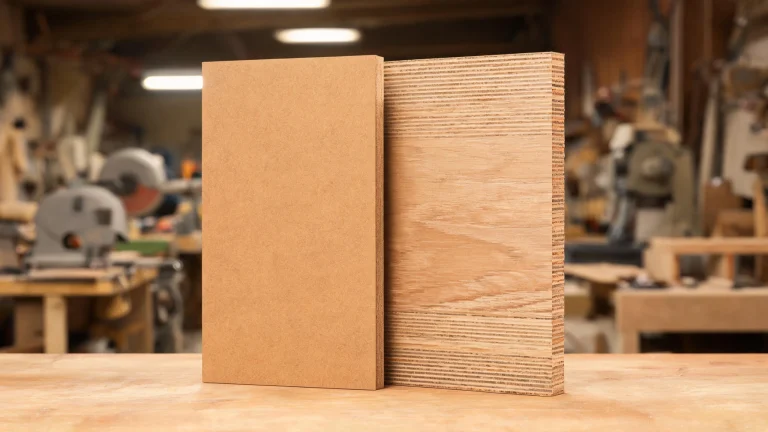
The cabinet itself plays a part too. Substrate thickness and finish change how a case dissipates heat and how the lighting channel integrates into the frame. We compared the two most common options in MDF vs. Sperrholz für Ladenausstattung: Welches sollten Sie wählen?
FAQ
What LED strip density do I need for even backlighting?
At least 120 LEDs per meter behind an opal diffuser. If the diffuser sits close to the strip, under about 30 mm, go to 240 per meter. Lower densities show visible diode dots and dark bands between them.
Can I retrofit LED lighting into an existing display case?
Usually, yes. Check three things first: channel depth (a strip plus diffuser needs roughly 12–15 mm), wiring access to each shelf level, and a home for the driver. Cases built for halogen often have deeper housings that convert well.
Is 3000K or 4000K better for a watch display?
4000K for watch heads; dials and steel bracelets read crisply under neutral light. Drop to 3000–3500K if the display leans on leather straps and rose gold cases, which look tired under cooler light.
How long do LED strips last inside a display case?
The diodes are typically rated 50,000 hours, which at 12 hours a day is more than 11 years. The driver is the realistic failure point, so buy quality drivers and mount them where air can reach them.
Lighting is a build decision, not an accessory decision. The channel gets recessed before the shelf exists, the driver needs a ventilated home, and the diffuser has to match the strip density. Tell us your store’s conditions — ceiling height, ambient light, what you sell most of — and the LED layout arrives in your CAD drawings before sampling, not as a note after delivery. Samples in 7–10 days, production in 30–45, every case shipped with lighting already wired and tested.
If you are planning the whole store, 15 Ideen zur Schmuckpräsentation für Einzelhandelsgeschäfte covers the layout decisions that pair with these lighting choices.